
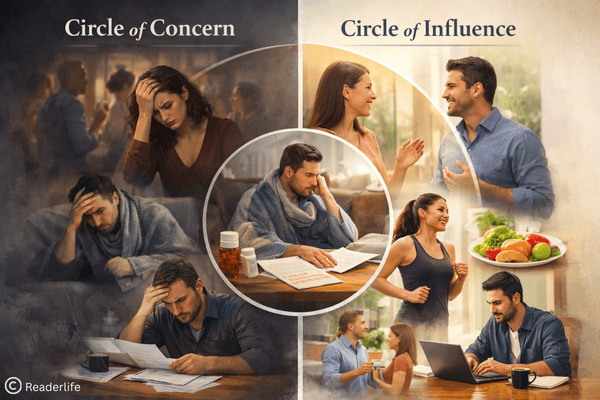
I recall a fascinating idea from Stephen R. Covey’s book, The Seven Habits of Highly Effective People. This idea effectively illustrates why many issues in our lives appear to be without solutions. Covey states that each situation we encounter falls into one of two categories: the Circle of Concern and the Circle of Influence.
This framework is surprisingly straightforward, yet it can be deeply impactful. Once you grasp it, you start to realize that a significant amount of our stress, anxiety, and frustration arises not from the problems themselves but from concentrating on the incorrect circle. The key to resolving most issues does not involve worrying more, but instead figuring out how to engage and take action within the Circle of Influence.
Table of Contents
Understanding the Two Circles of Life
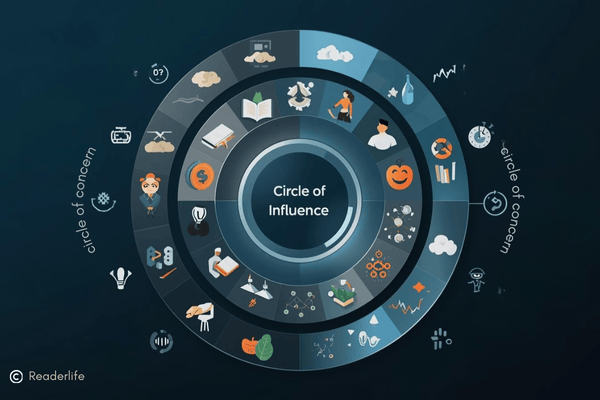
Stephen Covey describes that the Circle of Influence is contained within the Circle of Concern. Both circles encompass issues, yet the nature of these issues is fundamentally distinct.
The Circle of Concern
The Circle of Concern comprises all matters that emotionally impact us but are beyond our control. These are the issues we dwell on most, but we can do very little to address them.
Illustrations of the Circle of Concern include:
- Others’ opinions of us
- Natural disasters
- Fear of mortality
- Economic instability
- Excessive worry about outcomes and results
Regrettably, many individuals remain predominantly within this circle. They expend considerable mental energy on worries, fears, and overthinking, often without realizing that such worry doesn’t lead to solutions.
The Circle of Influence
Conversely, the Circle of Influence encompasses everything reliant on our actions, habits, and decisions. This is the sole circle where genuine change occurs.
Examples of the Circle of Influence involve:
- Continuous reading and learning
- Engaging in exercise and maintaining health
- Eating nutritious foods
- Enhancing social and communication abilities
- Fostering relationships
- Acquiring skills and generating income
While the Circle of Concern captures our attention due to its urgency, the Circle of Influence requires effort, patience, and discipline. Its benefits may take time to manifest but are enduring.
Why Most People Live Outside the Circle of Influence
One of the most significant insights Covey provides is that many individuals do not operate within their Circle of Influence. Instead, they find themselves confined within the Circle of Concern.
There are various reasons for this.
Firstly, worrying often seems easier than taking action. Remaining in the Circle of Concern offers an illusion of control. Individuals feel mentally occupied without truly achieving anything of substance.
Secondly, many people seek immediate answers. They desire quick relief from stress, rapid success, and fast results. Ironically, this craving for instant outcomes is itself a characteristic of the Circle of Concern, rather than the Circle of Influence.
Thirdly, engaging within the Circle of Influence is a gradual process. Activities such as reading, exercising, learning, and developing skills do not produce visible results right away. Due to the slow nature of progress, numerous individuals leave the Circle of Influence and revert to worrying.
The Real Solution Lies in the Circle of Influence
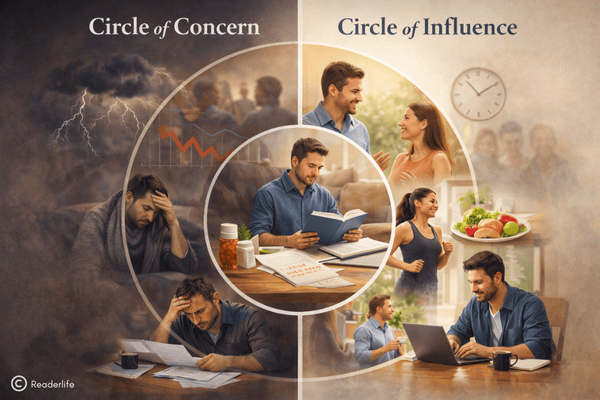
Many individuals overlook the fact that solutions to issues within the Circle of Concern typically reside in the Circle of Influence.
For instance:
• Social anxiety falls within the Circle of Concern, whereas honing communication skills is an aspect of the Circle of Influence.
• Concerns about health represent a Circle-of-Concern issue, while engaging in exercise and maintaining a balanced diet are actions within the Circle of Influence.
• Financial worries are categorized under the Circle of Concern, but acquiring skills and putting in consistent effort reside in the Circle of Influence.
People find themselves stagnant because they tend to search for solutions in the Circle of Concern, disregarding the Circle of Influence, which is what leads to actual change.
The Circle of Influence Is Preventive by Nature
One of the most vital elements of the Circle of Influence is that it focuses on preventive actions rather than reactive responses.
When you operate within the Circle of Influence, you take steps to avert future issues instead of addressing them after they arise.
Examples include:
- Engaging in exercise now to avert lifestyle-related diseases
- Seeking knowledge and reading to avoid ignorance
- Nurturing relationships to stave off loneliness and social anxiety
- Enhancing skills to eliminate the risk of unemployment and poverty
Preventive measures often lack a sense of urgency, which is why many individuals overlook them. However, everything significant in life is established through proactive steps, and such steps are found solely within the Circle of Influence.
How the Circle of Influence Expands Over Time
According to Stephen Covey, when you regularly engage within your Circle of Influence, that Circle of Influence becomes broader. Over time, it starts to push issues toward the outer edge of the Circle of Concern.
This doesn’t imply that the Circle of Concern vanishes entirely. Certain problems—such as natural disasters and mortality—will always be present. However, numerous anxieties diminish as influence increases.
For example:
- Improved health habits lessen medical-related fears
- Financial responsibility alleviates money anxieties
- Enhanced social skills reduce feelings of insecurity
The more you consistently operate within your Circle of Influence, the less control the Circle of Concern has over your thoughts.
Problems Beyond Control vs Problems Within Control
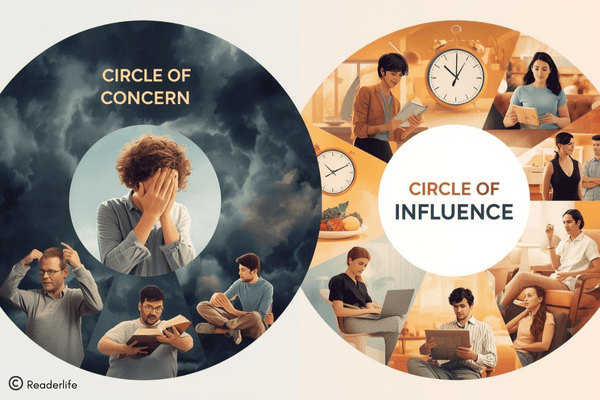
A major advantage of grasping the Circle of Influence is having clarity. It aids in differentiating between what is uncontrollable and what can be influenced.
Inevitable Challenges (Circle of Concern)
- Natural disasters
- Death
- Specific external occurrences
These challenges lie outside the Circle of Influence. Worrying about them does not alter their results.
Controllable Challenges (Circle of Influence)
- Social anxiety
- Lifestyle-related illnesses
- Lack of education
- Poverty
These issues demand time and effort, yet they can be diminished or resolved through persistent effort within the Circle of Influence.
Reasons Why Short-Term Solutions Fail
Many individuals shy away from the Circle of Influence because it calls for patience. Instead, they seek temporary fixes—quick solutions that offer immediate comfort.
Nonetheless, short-term solutions nearly always exacerbate the issues:
• Avoiding social interactions escalates anxiety
• Neglecting health aggravates illness
• Escaping responsibilities intensifies financial strain
The Circle of Influence operates slowly but leads to lasting change. Quick fixes belong to the Circle of Concern.
Reasons Few Individuals Achieve True Health or Success
The uncomfortable reality is that a small number of people are healthy, and even fewer achieve success because only a handful are willing to consistently engage within their Circle of Influence.
Working within the Circle of Influence necessitates:
- Time
- Energy
- Patience
- Determination
Most individuals find it hard to maintain long-term efforts without immediate benefits. Consequently, they remain ensnared in the Circle of Concern, hoping that circumstances will improve naturally.
How the Circle of Influence Reduces Anxiety
Comprehending the Circle of Influence significantly lessens anxiety. It highlights the uselessness of fretting over things that are beyond our control. When attention moves from results to the effort put in, mental strain diminishes. Taking responsibility takes the place of feeling powerless. Taking action replaces feelings of fear. Existing within the Circle of Influence doesn’t eradicate issues, but it reinstates a feeling of control and purpose.
Living Inside the Circle of Influence
The answer to many of life’s challenges lies not in overthinking but in taking consistent and patient actions within the Circle of Influence.
Activities such as reading, exercising, acquiring knowledge, developing skills, fostering relationships, and generating income might seem slow, but they gradually transform life.
As time goes by, the Circle of Influence becomes more robust while the Circle of Concern starts to lose its impact.
Also Read: Life-Changing Lessons from The 7 Habits of Highly Effective People”
Conclusion, prioritize Influence over Worry
The idea proposed by Stephen Covey reveals an enduring truth:
Worry resides within the Circle of Concern.
Growth exists within the Circle of Influence.
The Circle of Concern will always be present, but it doesn’t have to control our lives.
When we consistently opt for effort instead of worry and action instead of fear, the Circle of Influence widens, leading to a reduction in most problems over time.